Home Nieuwsarchief
maandag, 27. augustus 2012
Nieuws op de website
Synthetic Biology Newsletter 02 published

bruceJune 10, 2011

Today, the first edition of the Synthetic Biology Newsletter was published. The Synthetic Biology Newsletter is an initiative of LIS Consult and the Synthetic Biology Project of the Woodrow Wilson International Center for Scholars. The newsletter is financially supported by the Commission on Genetic Modification and the  Rathenau Institute, both in the Netherlands.

The full newsletter (in PDF) can be downloaded here


In this issue:

Inside the work of the United States Presidential Bioethics Commission

In December of 2010, the Presidential Commission for the Study of Bioethical Issues concluded their investigation into the ethical and governance issues surrounding the emerging field of synthetic biology. In a 180 page public report, the commission emphasized the need to strike a balance between an overly prescriptive and excessively laissez faire mode of oversight, ultimately adopting a stance of ‘prudent vigilance’. An event hosted at the WilsonCenter in March 2011 aimed to encourage a trans-Atlantic discussion about the similarities and differences between the commission’s recommendations and those of the European Group on Ethics.

More about dominant frames and discourses in the synbio debate

Two recent studies shed further light on society’s response to synthetic biology, a topic which we also discussed in the first issue of this Newsletter (October 2010). One study by Helge Torgersen and Jürgen Hampel analyses synbio’s potential for controversies similar to those of genetically modified crops. They conclude that controversies about synbio are not (yet) likely to emerge. The other study was done for the Rathenau Institute and maps the coverage of the present debate in theUnited States and three European countries. This study found a strong emphasis on issues of risk and innovation, and weakly developed discourses on ethical and political issues, an imbalance that could still elicit controversies in the near future.

Vaccines: the first commercial application of synthetic biology?

According to Craig Venter, especially famous for his first ‘synthetic’ bacterial cell, the production of seed stocks for flu vaccines could be the first field of application for synthetic genome biology. Last year, Venter’s Synthetic Genomics and the J. Craig Venter Institute formed a new company, Synthetic Genomics Vaccines (SGVI), which announced a three-year alliance with drug company Novartis to develop a bank of synthetic seed viruses. Is this really revolutionary? Ron Fouchier, professor of Molecular Virology at the Erasmus Medical Center in Rotterdam (The Netherlands), disputes the hype by putting the development of virus ‘libraries’ in the context of an ongoing development.

Do-It-Yourself biology: The re-emergence of citizen science

In recent years, synthetic biology has become more accessible to the masses. With the internet providing an array of ‘how-to’ knowledge and companies such as Ginkgo Bioworks providing easy access to genes, creative groups of students and hobby biologists have embraced the new field of synthetic biology. These Do-It-Yourself biologists are poised to be a valuable creative resource but also a potential threat to safety. While opponents of DIYbio worry about lack of regulation and potential for bioterrorism, supporters emphasize the positives of DIYbio as a movement opening to the public what was once an elitist field and exciting people about science again.

Biosecurity at the science-policy nexus: developing a vision for the future

The last decade we have seen a rising concern about the potential misuse of biotechnology for terrorist purposes. Internationally, and particularly in the US, biosecurity became an important political issue in the context of the events of 9/11 and other terrorist attacks. The emergence of synthetic biology further added to these political biosecurity concerns. How to deal with biosecurity at this changing and challenging nexus between science and policy? A workshop focussing on this question, organised by the Rathenau Institute in October of last year, resulted in a lively discussion and some interesting observations and conclusions.

BIO:FICTION: where Science and Arts meet

Bio:Fiction is the world’s first synthetic biology science, art and film festival, which took place at the Austrian NaturalHistory Museum last May. Two days with lectures, discussions, the opening of an exposition of works of art inspired by synthetic biology, and a film competition. And the winners are…….

 
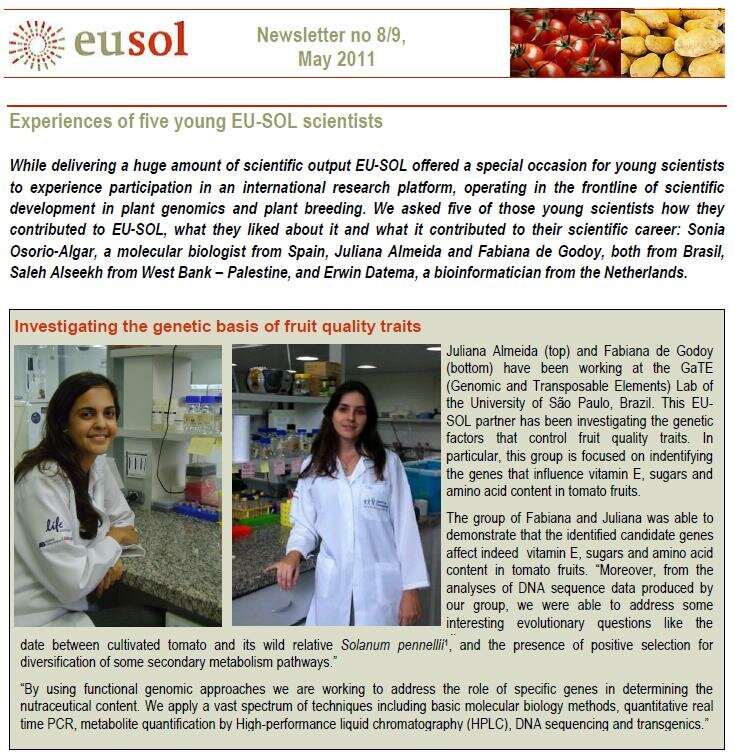
EU-SOL Newsletter 08 released
eusolnewsletter08

1 May, 2011

Started in May 2006, the EU-SOL programme has come to an end. Although this means that it is time to wrap up and see what has been achieved in the past five years. This final edition of the EU-SOL newsletter is not going to present a total overview of what has been achieved. Instead, we asked five young scientists who participated in the project about their contributions and opinions. Furthermore, we report four interesting contributions to an open innovation seminar where the food industry and the seed industry shared their experiences in how to benefit from the breakthrough research and innovations achieved in plant breeding. This newletter also contains an issue about the current industry debate about patents on plant genes, gives an impression of industry's evaluation of the project and highlights the availability of tutorials on bioinformatics tools that help scientists and companies to make effective use of the vast amount of genomic and phenotypic data that was collected in the past five years, as well as a schoolpack with segregating tomato seeds that was developed during the program.


The full newsletter can be downloaded here (PDF, 2.7 Mb)

 
Recente Publicaties
Ø Huib de Vriend (2010), Analysis of Eurobarometer 2010, 21 December 2010.

Ø E.T. Lammerts van Bueren, G. Backes, H. de Vriend, H. Østergård, The role of molecular markers and marker assisted selection in breeding for organic agricultureEuphyticaonline publication, 24 April 2010, DOI 10.1007/s10681-010-0169-0.

Ø Huib de Vriend  (2010), EU-SOL newsletter 06, LIS Consult, April 2010.

Ø Huib de Vriend  (2010), EU-SOL Q&A, LIS Consult, April 2010.

Ø Huib de Vriend  (2010), Areaal transgene gewassen 2009, LIS Consult, 23 februari 2010.

Ø Huib de Vriend en Piet Schenkelaars (2010), Biotechnologie: duur of duurzaam?, Milieudefensie Magazine, februari 2010.

Ø Huib de Vriend en Piet Schenkelaars (2009), Breed draagvlak nodig voor teelt van gentech-gewassen, Het Financieele Dagblad, 27 november 2009.

Ø Markus Schmidt, Alexander Kelle, Agomoni Ganguli-Mitra, Huib de Vriend (2009), Synthetic biology: The technoscience and its societal consequences, Springer uitgave, te bestellen via https://www.springer.com/biomed/book/978-90-481-2677-4

Ø Dirk Stemerding, Huib de Vriend, Bart Walhout, Rinie van Est (2009), Synthetic Biology and the Role of Civil Society Organizations: Shaping the Agenda and Arena of the Public Debate. In: Markus Schmidt, Alexander Kelle, Agomoni Ganguli-Mitra, Huib de Vriend (eds), Synthetic biology: The technoscience and its societal consequences, Springer uitgave, te bestellen via http://www.springer.com/biomed/book/978-90-481-2677-4

Ø Huib de Vriend (2009), EU-SOL Newsletter nr. 5 , LIS Consult, October 2009.

Ø Marianne Benard, Huib de Vriend, Paul van Haperen en Volkert Beekman

(2009), Science and Society in Dialogue about Marker Assisted Selection, J. Agric. Environ Ethics, Accepted 4 September 2009, DOI 10.1007/s10806-009-9211-4.

Ø Huib de Vriend (2009), Areaal transgene gewassen in de VS 1998 - 2009, LIS Consult, juli 2009.


Ø Huib de Vriend (2009), GMO-free additives and processing aids for organic food and feed production, LIS Consult, commissioned by the Animal Science Group of Wageningen University & Reserach Centre, February 2009.


Ø Huib de Vriend (2008), EU-SOL Newsletter 03/04,  LIS Consult, November 2008.

Ø Piet Schenkelaars en Huib de Vriend (2008), Oogst uit het lab, juni 2008.

Ø Huib de Vriend (2008), Areaal transgene gewassen in de VS 1998 - 2008,  LIS Consult,  juli 2008.

Ø Huib de Vriend (2008), EU-SOL newsletter No.2, mei 2008.

Ø Huib de Vriend (2008), Verslag van de workshop Ggo-vrije hulpstoffen en additieven voor biologische (dier-)voeding, in opdracht van de Animal Sciences Group Wageningen UR, LIS Consult,  mei 2008.

Ø Huib de Vriend (2008), Ggo-vrij hulpstoffen en additieven voor biologische (dier)voeding, verkenning in opdracht van de Animal Sciences Group Wageningen UR, LIS Consult,  april 2008.

Ø Piet Schenkelaars en Huib de Vriend (2008), Bevindingen dialoog met maatschappelijke organisatie over klonen van dieren voor voedselproductie, mei 2008.

Ø Piet Schenkelaars en Huib de Vriend (2008), Klonen van dieren voor voedselproductie: Achtergronddocument, april 2008.

Ø Huib de Vriend (2008), Effecten van het EU-toelatingsbeleid op de grondstoffenmarkt,studie in opdracht van Greenpeace Nederland,  LIS Consult,  januari 2008.

Ø Huib de Vriend (2008), Arealen transgene gewassen 1996 - 2007, LIS Consult,  februari 2008.

Ø Huib de Vriend (2008), Octrooien en open source benaderingen in de life sciences: een verkenning, LIS Consult, studie uitgevoerd in opdracht van het Rathenau Instituut, januari 2008.

Ø Huib de Vriend (2007), Areaal transgene gewassen in de Verenigde Staten 1998 - 2007, LIS Consult,  november 2007.

Ø Huib de Vriend, Rinie van Est en Bart Walhout (2007), Bericht aan het Parlement over Synthetische Biologie, Rathenau Instituut, Den Haag, september 2007.

Ø Huib de Vriend, Rinie van Est en Bart Walhout (2007), Leven maken: Maatschappelijke reflectie op de opkomst van synthetische biologie, Rathenau Instituut, Den Haag, september 2007.

Ø Huib de Vriend (2007), EU-SOL newsletter No.1, September 2007.

Ø Huib de Vriend en Maud Radstake (2007), De DNA-Dialogen: Evaluatie pilotproject Interactie met Publieksgroepen over Genomics, LIS Consult i.s.m. het Centre for Scoiety and Genomics, september 2007.

Ø Huib de Vriend (2007), De sociale dimensie van duurzaamheid, Een verkenning in opdracht van Transforum, LIS Consult, Februari 2007.

Ø Huib de Vriend (2007), Een Raad voor ethiek en biotechnologie, Verslag van een conferentie, LIS Consult, in opdracht van het ministerie van Volkshuisvesting, Ruimtelijke Ordening en Milieu, Den Haag, 4 december 2006

Ø Huib de Vriend (2006), Constructing Life: Early social reflections on the emerging field of synthetic biology, Rathenau Instituut, december 2006

Ø Huib de Vriend (2006), Hoe Europeanen denken over biotechnologie en genetisch gemodificeerd voedsel in 2005, analyse van de resultaten van Eurobarometer 64.3, 16 augustus 2006.


Deze en oudere publicaties vindt u in het publicatiearchief, gesorteerd op onderwerp.
 
Drivers of Consolidation in the Seed Industry

drivers for consolidation29 maart 2011

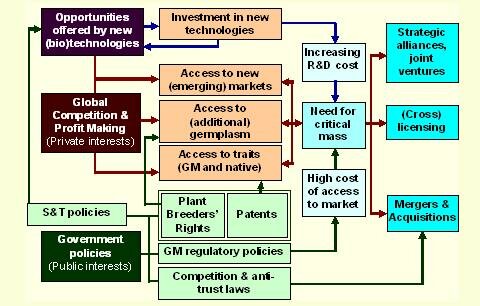
Vaak wordt verondersteld dat schaalvergroting binnen de veredelingssector rechstreeks verband houdt met het toepassen van genetische modificatie. Uit literatuuronderzoek en interviews met betrokkenen in de zaadindustrie is gebleken dat meerdere factoren een rol spelen bij dat proces van schaalvergroting. Zo is er sprake van een algemene stijging van de kosten voor R&D en speelt het octrooirecht een belangrijke rol. Daarnaast vormen de hoge eisen en daarmee verband houdende kosten voor markttoelating een belangrijke barrière voor het ontwikkelen van genetisch gemodificeerde gewassen door relatief kleine veredelingsbedrijven. Uit het rapport blijkt dat overnames en fusies binnen de zaaigoedmarkt al langere tijd plaatsvinden en in de toekomst waarschijnlijk verder zullen toenemen. Deze schaalvergroting vindt ook plaats binnen zaaigoedmarkten waar genetische modificatie niet wordt toegepast, zoals de groentenzadensector.


In de Verenigde Staten lijkt de toegenomen schaalvergroting vooralsnog geen rem op innovatie te hebben gezet. De onderzoekers hebben de drie belangrijkste Amerikaanse zaadmarkten (soja, maïs en katoen) waarin genetische modificatie een belangrijke rol speelt onder de loep genomen. Ondanks een aanzienlijke consolidatie bleek het aantal aangeboden producten sterk opgelopen. Niet onderzocht is of de toename van variëteiten hoofdzakelijk te danken is aan genetische modificatie van bestaande hybriden of dat ook nieuw materiaal via conventionele veredeling is ontwikkeld. Het antwoord op deze vraag is belangrijk in verband met een mogelijke versmalling van de genetische diversiteit binnen het rassenassortiment.

Het volledige rapport (1,4 Mb) kan hier worden gedownload

 
Naar de kern van de bio-economie

bio-economie11 maart 2011

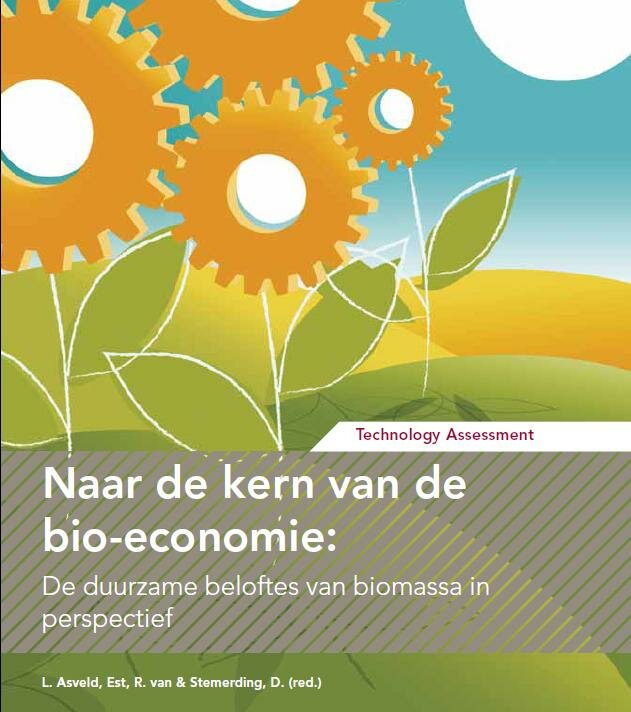
Deze week presenteerde het Rathenau Instituut het boekje "Naar de kern van de bio-economie: De duurzame beloftes van biomassa in perspectief." Met dit boekje wil het Ratheanu Instituut een bijdrage leveren aan het maatschappelijk en politiek debat over de toekomst van het gebruik van biomassa voor de productie van energie, chemicaliën en materialen. Naats de technologische stand van zaken, waarin een belangrijke rol is weggelegd voor de biotechnologie, komt het tot nu toe geveorde overheidsbeleid aan bod en wordt het maatschappelijk debat geanalyseerd.

De publicatie kan hier worden gedownload

 
<< Start < Vorige 1 2 3 4 5 6 7 8 9 10 Volgende > Einde >>

Pagina 2 van 26