| Toekomstbeelden voor duurzame energievoorziening |
|
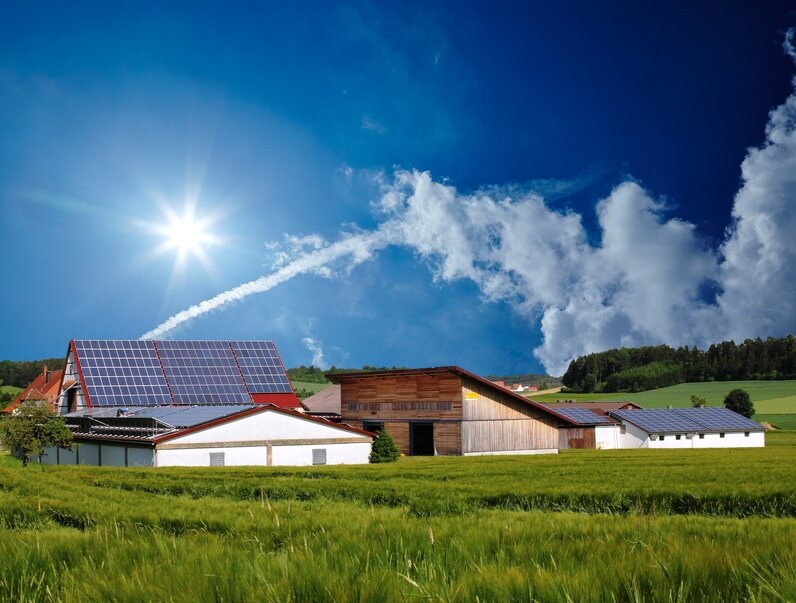 In het kader van het onderdeel 'maatschappelijk debat' zijn aan de hand van een analyse van dominante drivers twee toekomstbeelden voor de toekomstige energievoorziening in Nederland ontwikkeld: het energiehavenmodel en het energieboerderijmodel. In beide toekomstbeelden, die elkaar niet uitsluiten, is een andere rol weggelegd voor de toepassing van kennis en technologie die in het BioSolar Cells programma wordt ontwikkeld. In het kader van het onderdeel 'maatschappelijk debat' zijn aan de hand van een analyse van dominante drivers twee toekomstbeelden voor de toekomstige energievoorziening in Nederland ontwikkeld: het energiehavenmodel en het energieboerderijmodel. In beide toekomstbeelden, die elkaar niet uitsluiten, is een andere rol weggelegd voor de toepassing van kennis en technologie die in het BioSolar Cells programma wordt ontwikkeld.
De energiehaven wordt gekenmerkt door grootschalig en intensief gebruik van de Nederlandse havens en kustgebieden. Naast de groei en ontwikkeling van windparken op zee is hierin ruimte voor de ontwikkeling van grootschalige algenteelt.
De energieboerderij staat voor kleinschalige vormen van energieproductie, gekoppeld aan lokale en regionale distrubutienetwerken waarin huishoudens en het MKB, al dan niet in collectieve verbanden, energie produceren uit zon, wind of andere hernieuwbare bronnen om in hun eigen behoefte te voorzien. Naast smart grids, die moeten zorgen voor een balans tussen het aanbod van en de vraag naar energie, is hier een rol weggelegd voor kunstmatige fotosynthese.
Hoe de toekomst er uit zal zien is niet alleen afhankelijk van de technologie die onder meer in het BioSolar Cells programma wordt gegenereerd, maar wordt in belangrijke mate bepaald door drijvende krachten en keuzes in het beleid, de economie en de samenleving. Daarmee kunnen deze toekomstbeelden een bijdrage leveren aan een zinvol maatschappelijk debat waarbij de inzet van kennis en technologie wordt geplaatst in een context van de manier waarop onze samenleving invulling wil geven aan een duurzame energievoorziening.
Het rapport kan hier worden gedownload. Bij het rapport hoort een bijlage met deelanalyses, die hier kan worden gedownload.
|
|
| Solar Fuels for a sustainable energy & feedstock supply |
The publication 'Solar Fuels and Artificial Photosynthesis' explains how 'solar fuels', fuels produced directly from sunlight using water and CO2, could contribute to a sustainable supply of energy and feedstock . This publication is based on a publication that was realeased by the British Royal Society of Chemistry in Janary 2012. Specific Dutch examples and the goals of the BioSolar Cells program were added. This english edition can be downloaded here (PDF, 2,3 Mb). A Dutch edition will appear soon as nr. 17 in the series 'Green Feedstocks'.
|
| Design ontmoet biologie: Synthetische biologie in Vlaanderen |
|

Op 8 oktober 2012 presenteerde het Vlaamse Instituut Samenleving & Technologie (IST) in Brussel een inleidende en voor Vlaanderen relevante verkenningvan synthetische biologie. Het IST heeft dat gedaan in de vorm van dossier dat is gericht aan de leden van het Vlaams Parlement.
De toegevoegde waarde van deze verkenning zit in de actualisering van de technologische ontwikkelingen en de maatschappelijke aspecten, maar vooral in de beschrijving van de potentieel belangrijke actoren in Vlaanderen. Ook wordt uitvoerig stilgestaan bij de rol van biokunstenaars in de maatschappelijke reflectie op de synthetische biologie.
Het rapport kan worden gedownload van de website van het IST (6,8 Mb)
|
|
8 februari 2012
In 2011 is het wereldwijde areaal genetisch gemodificeerde gewassen (gg-gewassen) met ongeveer 8% toegenomen en is nu 160 miljoen hectare groot, ongeveer 100 keer het landbouwareaal van Nederland. Dat stelt de International Service for the Acquisition of Agri-biotech Applications (ISAAA) in haar jaarlijkse overzicht van de commerciële teelt van gg-gewassen. Met een aandeel van ruim 47% blijft soja blijft het dominante gg-gewas, maar gg-katoen is overduidelijk met een opmars bezig. Daarmee neemt tegelijkertijd de dominantie van de Verenigde Staten, met een areaal van 69 miljoen hectare soja, mais, katoen en koolzaad altijd nog de grootste producent van gg-gewassen, geleidelijk aan af. Sterk in opkomst zijn landen als Brazilië (soja, maïs, katoen), China en India (met name katoen).
Kijken we naar de toegepaste eigenschappen, dan blijft herbicidentolerantie altijd nog de nummer één, maar zien we de laatste jaren een sterke toename van 'gestapelde eigenschappen', waarbij sprake is van uiteenlopende combinaties van verschillede soorten insectenresistentie, al dan niet met hercidentolerantie.
Met iets meer dan 100.000 ha insectenresistente maïs (MON810) blijft Europa altijd nog ver achter.
Van de ontwikkeling van het areaal gg-gewassen tussen 1996 en 2011 is een overzicht beschikbaar (PDF, 90 kB).
Op de website van de ISAAA is een uitvoerige Executive Summary van de Global Status of Commercialized Biotech/GM Crops: 2011 beschikbaar.

|
29 November, 2011
Assuming that the media reflect to a large extend the public debate about biotechnology, both in reporting about this public debate and shaping it, we have analyzed more than 22,700 news articles about biotechnology collected from a wide range of sources between July 2005 and July 2010. These articles were stored in a database with attached information concerning the source, the type of biotechnology, geographical information about the event and major interests described in each article. Analysis of those data tells us something about the position of biotechnology in different regions of the world, shifts in this position over time, differences between agricultural (green), medical (red) and industrial (white) biotechnology, as well as the impact of major news issues on public opinion.
Data collection and analysis was commissioned by the Dutch Commission on Genetic Modification (COGEM).
Huib de Vriend et.al. (2011). Biotechnology in the news: Lessons from a quantitative analysis of news articles about biotechnology between July 2005 and June 2010, August 2011 (CGM 2011-12).
|
|
|
|
|
<< Start < Vorige 1 2 3 4 5 6 7 8 9 10 Volgende > Einde >>
|
| Pagina 1 van 27 |
 Nieuwsarchief